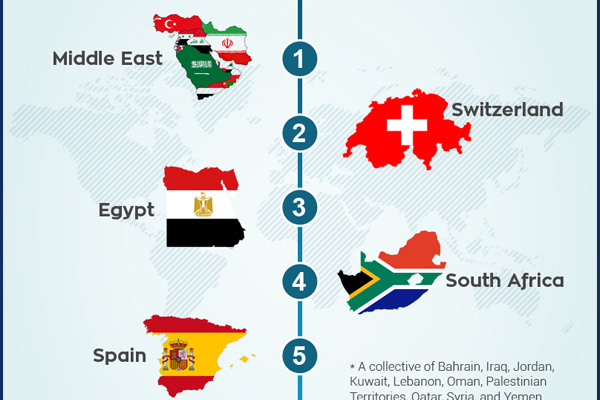


For years, articles about foreign entrepreneurs in the UAE have leaned on a single, static “top 5 nationalities” graphic without much explanation of where the ranking came from or how current it was. The truth is that no single, permanent ranking of “the top nationalities of UAE entrepreneurs” exists. Nationality data on company formation is collected by different bodies (Dubai Chamber of Commerce, individual free zones, the Ministry of Economy) for different purposes, over different time periods, and the picture shifts from year to year as trade patterns, visa policy, and global business conditions change.
Rather than repeat an old, unsourced ranking, this article works from data that can actually be checked: Dubai Chamber of Commerce membership statistics for the first half of 2025, and UAE-wide foreign direct investment (FDI) figures reported through UNCTAD’s World Investment Report process. Together, they give a realistic, current picture of who is setting up businesses in the UAE, and why the country continues to draw such a broad international base of founders.
Why a Single “Top 5” Ranking Is Misleading
Before looking at any numbers, it helps to understand what they actually measure. Dubai Chamber of Commerce membership figures reflect companies registering with the chamber in Dubai specifically, not the UAE as a whole, and not every business is required to hold chamber membership in the same way. Free zone company registers are held separately by each free zone authority and are not consolidated into a single public nationality breakdown. Ministry of Economy and UNCTAD figures track capital flows (FDI), which is a different measure again from the number of individual entrepreneurs or company owners.
None of these data sets, on their own, produce a definitive “top 5 nationalities of UAE entrepreneurs” that would hold true across the whole country and every type of company. What they do provide, when read for what they are and dated clearly, is a reliable snapshot of real, verifiable trends. That is the approach taken here.
Dubai Chamber of Commerce: New Company Registrations, H1 2025
Dubai Chambers publishes periodic data on new non-UAE company registrations by nationality. For the first half of 2025, the reported figures were as follows:
| Rank | Nationality | New Companies (H1 2025) | Year-on-Year Growth |
|---|---|---|---|
| 1 | India | 9,038 | 14.9% |
| 2 | Pakistan | 4,281 | 8.1% |
| 3 | Egypt | 2,540 | 8.3% |
| 4 | Bangladesh | 1,541 | 37.5% |
| 5 | United Kingdom | 1,385 | 11.1% |
Beyond the top five, Syria, China, Jordan, Turkiye, and Canada also featured prominently among new registrations in the same period. Bangladesh recorded the fastest year-on-year growth of any nationality in the top ten, at 37.5%, which is worth noting separately from the raw ranking by volume.
By sector, new memberships in this period were concentrated in wholesale and retail trade and in real estate and business services, each accounting for roughly 35% of activity, with construction at around 17%, and transport, storage, and communications together with social and personal services making up most of the remainder.
This is chamber membership data for Dubai specifically, current as of the first half of 2025. It will change in later reporting periods, and a business owner researching current standing should treat it as a snapshot rather than a permanent fact.
The Bigger Picture: UAE Foreign Direct Investment in 2025
Zooming out from Dubai Chamber membership to the UAE as a whole, UNCTAD’s investment reporting placed the UAE among the top ten global recipients of foreign direct investment in 2025, with inflows of roughly 48.2 billion US dollars, an increase of around 6% on the prior year. That ranked the UAE first in the Middle East region for FDI inflows, ahead of Saudi Arabia.
The UAE also featured among the top outbound investors globally, with UAE based capital invested abroad reaching an estimated 77 billion US dollars in 2025, up from roughly 63 billion the year before, and the country ranked second globally by greenfield project count for a third consecutive year. Manufacturing and telecoms or digital infrastructure were the largest sectors for inbound FDI, together accounting for roughly six in ten dollars of investment, with property making up a smaller share.
The UAE government has set a target of 65 billion US dollars in annual FDI inflows under its National Investment Strategy through 2031, which gives a useful benchmark against which future years can be measured as more data becomes available.
What Explains the Pattern
The nationalities that consistently appear near the top of UAE company registration data are not a coincidence. A few structural factors explain most of the pattern:
- Established diaspora communities. India, Pakistan, Egypt, and Bangladesh each have large, long established resident communities in the UAE, built up over decades of employment migration. It is common for individuals who first arrived on employment visas to later transition into business ownership once they have market knowledge, capital, and local relationships.
- Trade and historical ties. The UAE, and Dubai in particular, has functioned as a trading hub connecting South Asia, East Africa, and Europe for generations. Nationalities with strong existing trade corridors into the UAE, such as India and the United Kingdom, are well positioned to formalize that activity through locally registered companies.
- Regulatory openness to foreign ownership. Federal reforms allow 100% foreign ownership in most mainland business activities, removing the historical requirement for a UAE national shareholder in many sectors. Free zones have offered full foreign ownership for decades, which is part of why they remain a popular entry point regardless of nationality.
- Corporate tax environment. The UAE’s federal corporate tax regime, introduced in 2023, applies a 9% rate above a set profit threshold, with qualifying free zone income continuing to benefit from a 0% rate under specific conditions. Relative to many home markets, this remains a comparatively straightforward and moderate tax environment for a new company.
Choosing a Structure: Mainland, Free Zone, or Offshore
Foreign entrepreneurs entering the UAE market generally choose between three broad structures, and nationality has little bearing on which is appropriate. The right choice depends on where the business intends to trade and how it plans to operate.
A company set up through UAE mainland business setup can trade directly across the UAE and bid on government contracts, without the geographic restrictions that apply to free zone entities. This is typically the right route for a business that expects to serve UAE based clients directly, including through business setup in Dubai specifically for founders focused on that emirate.
A UAE free zone business setup suits founders whose activity is primarily international, export focused, or digital, and who value full foreign ownership, streamlined licensing, and, in many cases, a dedicated free zone community for their sector. Individual free zones differ in cost structure, permitted activities, and visa allocations, so the right fit depends on the specific business plan rather than the founder’s nationality.
For entrepreneurs and investors who want to hold assets or conduct international business without a physical UAE operating presence, UAE offshore company formation offers a lighter weight structure, commonly used for holding structures, international trade invoicing, and asset protection rather than day to day trading inside the UAE.
A separate route exists for established foreign companies that want a UAE presence without incorporating a new local entity. A branch of a foreign company allows an existing overseas business to operate in the UAE under its parent company’s name and legal identity, which is a common choice for larger firms testing the market or executing a specific UAE contract rather than building an independent UAE subsidiary from scratch.
Beyond Formation: What Foreign Owned Businesses Need Next
Registering a company is the first step, not the last. Once formed, a foreign owned business in the UAE has ongoing compliance and operational obligations that differ in important ways from what founders may be used to at home. Corporate tax registration and filing now applies to most UAE businesses, and getting the classification right from the outset, particularly around free zone qualifying income, matters more than it did before 2023. Support with corporate tax compliance is one of the areas where founders unfamiliar with the UAE system most often need guidance.
Opening a functioning local bank account is another step that catches many new entrants off guard, since UAE banks apply their own due diligence standards that can vary by business activity and ownership structure. Structuring the company and its documentation with corporate bank account opening requirements in mind from the start tends to save considerable time later.
Finally, visa sponsorship, labour card processing, and the wider set of government approvals that come with employing staff in the UAE are typically handled through PRO services, which remain one of the more time intensive parts of running a UAE company for founders managing the process without local support.
The Honest Takeaway
The UAE’s international entrepreneur base is genuinely broad, and the reasons for that are structural and durable: full foreign ownership rules, a comparatively moderate tax regime, a choice of mainland, free zone, and offshore structures, and decades of trade and diaspora ties across South Asia, the Middle East, Europe, and beyond. What changes from year to year is exactly which nationalities lead the registration numbers in any given period, and by how much. Dubai Chamber’s H1 2025 data shows India, Pakistan, Egypt, Bangladesh, and the United Kingdom at the top of new company registrations in Dubai specifically, with Bangladesh growing fastest. UAE wide FDI data for the same year shows the country ranked among the world’s top ten destinations for inbound investment. Both are real, current, and worth citing on their own terms, rather than folded into a single, unchanging “top 5” claim.

