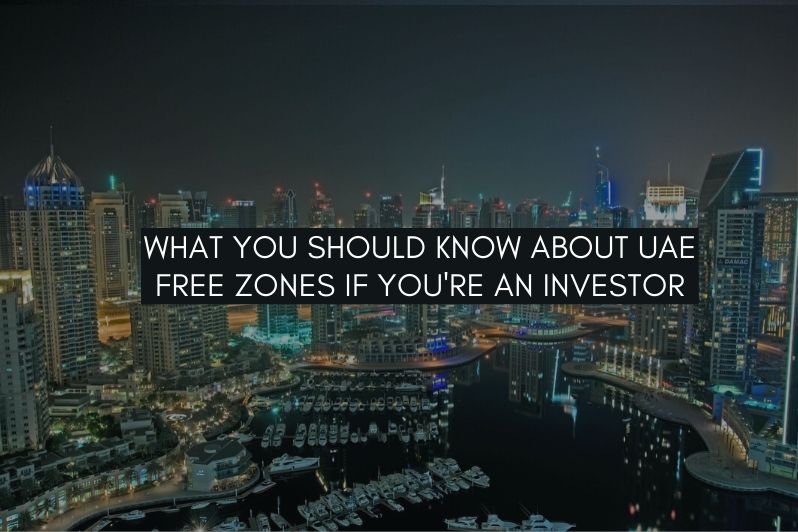


UAE free trade zones are designated economic areas that offer favourable conditions for establishing and operating a business, particularly well suited to import, production, processing, and modifying goods, since customs duties generally apply only when goods are actually delivered into the UAE mainland or sold domestically, not while they remain within the free zone or move internationally.
Most UAE free zones are located close to major seaports and international airports, giving businesses a genuine logistical advantage for international trade rather than just a licensing convenience.
What Investors Should Know About UAE Free Zones
More Than 45 Free Zones, Each With Its Own Focus
The UAE has more than 45 free zones across its seven emirates, and each operates under its own authority with its own licensing rules, activity list, and fee schedule. Many are built around a specific sector: Dubai Internet City focuses on IT, internet, and software businesses, Dubai Design District (d3) is built around design and fashion, DIFC and ADGM focus on financial services under English common law, and JAFZA and KIZAD focus on industrial, logistics, and port-connected activity. Choosing the right zone depends far more on matching your activity to the zone’s actual specialisation than on cost alone.
JAFZA: The UAE’s First and Largest Free Zone
Jebel Ali Free Zone, established in 1985, was the UAE’s first free zone and remains one of the largest in the world, sitting directly beside Jebel Ali Port, one of the busiest ports in the Middle East, with connections to roughly 150 ports globally. Businesses registered in JAFZA generated an estimated USD 190 billion in trade value in a recent year, reflecting the sheer scale of activity the zone supports, particularly for logistics, manufacturing, and large-scale trading operations.
100% Foreign Ownership
UAE free zone companies allow 100% foreign ownership, with no requirement to partner with a UAE national. This has historically been one of the clearest advantages free zones held over mainland company formation, though it is worth noting that most mainland business activities now also permit full foreign ownership following recent Commercial Companies Law reforms, so ownership alone is no longer the deciding factor it once was.
Corporate Tax: What’s Actually True Today
It is important to correct a claim that still circulates widely: UAE free zones do not offer a blanket exemption from corporate tax. Free zone companies are subject to UAE federal Corporate Tax like any other UAE entity, and may qualify for a 0% rate specifically on qualifying income as a Qualifying Free Zone Person, provided the business meets ongoing substance and qualifying income conditions. Corporate Tax registration is mandatory for all free zone companies regardless of profitability or QFZP eligibility. Personal income tax remains at 0% across the UAE, which is accurate, but that should not be confused with a blanket corporate exemption.
Market Access: Selling Into the UAE Mainland
Free zone businesses generally cannot sell their goods directly into the domestic UAE mainland market without going through a local distributor or agent, since free zone companies do not automatically have the right to sell retail into the mainland. Free zone companies can generally sell on a wholesale basis and internationally without this restriction. Certain zones with dedicated retail infrastructure, such as Dubai Design District’s exhibition halls, restaurants, and retail stores, are exceptions built specifically to allow direct customer-facing sales within the zone itself.
Company Formation and Branch Options
Within a free zone, it is possible to register a brand-new company, a subsidiary, or a branch of an existing local or foreign company. A branch operates under the same name as its parent company and must carry out the same activities, if permitted within that free zone, since a branch has no independent legal personality separate from its parent.
Visa Allocation
Free zone companies can obtain UAE residence visas, generally valid for two to three years and renewable. The number of visas available typically depends on the office space leased and the specific free zone’s own allocation rules; a common industry rule of thumb ties visa quota to roughly 9 square metres of leased office space per visa, though this varies by authority and package, so it is worth confirming the specific zone’s current allocation rather than assuming a fixed ratio applies universally.
Office Requirements
A free zone company’s registered office must be located within the free zone where it is registered. Depending on the business activity, a physical office is not always mandatory; many free zones offer flexi-desk arrangements for businesses that do not require dedicated real estate, with the exact requirement generally tied to the activity stated on the license.
Repatriation of Profits and Capital
Free zone business owners, whether local or foreign, can generally withdraw profits and capital from the UAE without restriction, one of the more consistently cited advantages of free zone structures.
Industrial Licenses and the GCC Duty-Free Agreement
Businesses holding an industrial license and manufacturing products within a free zone should be aware that the GCC’s intra-regional duty-free trade agreement generally does not apply to goods manufactured under a free zone industrial license when supplying other GCC countries, since free zone production is treated differently from mainland-manufactured goods for the purposes of that agreement. This is a detail businesses planning GCC-wide distribution from a UAE free zone should confirm specifically before finalising their supply chain.
What Is a Free Zone, in Simple Terms
A free zone is a designated economic area where goods and services can be traded under preferential customs and tax arrangements, distinct from the standard rules that apply across the rest of the UAE mainland. This structure is attractive to foreign investors primarily because it removes the local ownership requirements that historically applied to mainland companies, though as covered above, that advantage has narrowed considerably following recent mainland ownership reforms.
Choosing the Right Free Zone
The right free zone depends entirely on the specific business activity, target market, and operational needs, rather than a single “best” free zone that suits every business. A trading or logistics business benefits from a port-connected zone like JAFZA, a financial services business benefits from DIFC or ADGM’s common law framework, and a small consultancy or service business may be better served by a lower-cost, more flexible zone built around office-based activity rather than industrial infrastructure. Businesses evaluating their options should weigh activity fit, cost, and market access requirements together rather than defaulting to whichever zone is most commonly advertised. See our guide to UAE free zone business setup to review your options.
Common Mistakes Investors Make
- Assuming free zones offer a blanket corporate tax exemption, rather than the conditional 0% rate available through Qualifying Free Zone Person status
- Choosing a free zone based purely on cost, without confirming the activity is actually well-supported by that zone’s infrastructure and specialisation
- Assuming a free zone license automatically permits direct retail sales into the UAE mainland market
- Underestimating visa allocation requirements relative to the office space being leased
- Overlooking the GCC duty-free exemption gap for goods manufactured under a free zone industrial license
FAQs
Do UAE free zones still offer full corporate tax exemption?
No. Free zone companies are subject to UAE Corporate Tax like other UAE entities, and may qualify for a 0% rate on qualifying income as a Qualifying Free Zone Person, subject to meeting substance and qualifying income conditions. See our guide to Corporate Tax in the UAE for registration requirements.
Can a free zone company sell directly to customers in the UAE mainland?
Generally not without a local distributor or agent, since free zone companies do not automatically have mainland retail selling rights. Wholesale and international sales are typically unrestricted.
How many free zones does the UAE have?
More than 45 free zones across the UAE’s seven emirates, each with its own licensing authority, activity focus, and fee structure.
Which is the largest free zone in the UAE?
Jebel Ali Free Zone (JAFZA), established in 1985, is the UAE’s first and one of the largest free zones in the world, connected directly to Jebel Ali Port.
Do free zone companies still have an ownership advantage over mainland companies?
The advantage has narrowed. Most mainland business activities now also permit 100% foreign ownership following recent Commercial Companies Law reforms, so the decision between mainland and free zone now depends more on market access and activity fit than ownership rules alone. See our guide to UAE mainland business setup for comparison.
Is a physical office always required for a free zone company?
Not always. Many free zones offer flexi-desk arrangements for businesses that do not require dedicated office space, depending on the specific licensed activity.
Making an Informed Free Zone Decision
UAE free zones remain a genuinely strong option for international investors, but the decision should be based on activity fit, realistic market access needs, and current tax rules, not outdated assumptions about blanket tax exemption or ownership advantages that have narrowed considerably in recent years. Matching the free zone’s specialisation, whether logistics, finance, technology, or general commercial activity, to the actual business plan is what separates a well-chosen free zone from a costly mismatch. Businesses forming a branch of an existing company within a free zone can review our branch of foreign company and branch of local company services for that specific route.

