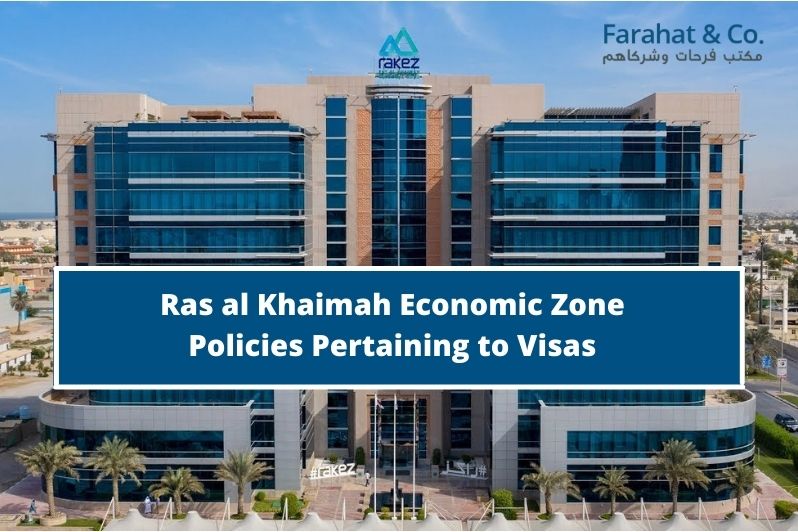


Ras Al Khaimah Economic Zone (RAKEZ) is one of several free zones in the UAE, operating under its own set of regulations covering customs, tax, and business licensing, with dedicated sub-zones for business, academic, and industrial activities. This guide covers the current visa policies and requirements tied to establishing a presence, or gaining residency, through RAKEZ.
Ways to Obtain a Residency Visa Through RAKEZ
Business Setup in RAKEZ
Starting a business in the free zone is the most direct route to a residency visa, with the visa tied to the business license issued to the company. Investors can also acquire shares in an existing RAKEZ-registered company, provided the shareholding meets the value threshold required for investor visa eligibility.
Employment Sponsorship
Employees taking up long-term roles within RAKEZ-registered businesses require a residency visa, sponsored by their employer. A residency visa or labour card is mandatory for all nationalities except UAE and GCC nationals. Visa-related costs for employees, including Emirates ID processing and medical examination fees, are typically covered by the employer rather than the employee.
Property Purchase
Purchasing residential property in the UAE above the applicable investment threshold can qualify a buyer for an investor visa. Exact thresholds and visa terms differ depending on the specific visa route (standard property investor visas differ from the longer-term Golden Visa property route), so buyers should confirm current eligibility criteria for their specific situation rather than assuming a single fixed threshold applies universally.
Absence From the UAE and Visa Cancellation
Residency visa holders who remain outside the UAE for an extended continuous period risk automatic visa cancellation under standard UAE immigration rules. Anyone whose visa has lapsed for this reason needs to apply for a new visa to re-establish residency, which involves repeating much of the original application process and its associated costs. Businesses and individuals should track absence periods carefully rather than assuming a visa remains valid indefinitely regardless of time spent outside the country.
Requirements for a RAKEZ Work/Residency Visa
The process for obtaining a work or residency visa tied to RAKEZ employment is processed by the employer and requires a genuine job offer or employment contract from a business licensed within the free zone. Employment visas and work permits can be issued for terms ranging from one to ten years depending on the specific category.
Commonly required documents include:
- Job offer and employment contract
- Duly completed application form
- Emirates ID application
- Recent colour passport-sized photographs
- Valid commercial license for the company processing the employee’s work visa
- Valid company establishment card (original and copies)
- Original passport of the visa applicant
- Medical fitness test certificate
- Entry permit issued through the Ministry of Human Resources and Emiratisation (MOHRE)
All documentation submitted to the free zone authority must be in Arabic, including the employment contract itself, and three copies of the contract are typically retained: one for the employer, one for the free zone authority, and one for the employee.
Important Notes on Employment Visa Rules
- Working in the UAE without the correct visa and permit documentation is illegal, regardless of nationality or circumstance
- Anyone who secures employment while on a tourist visa needs to formally change their visa status before beginning work; starting employment on a tourist visa is not permitted
- There is no fixed age limit on work contracts, though older applicants should confirm whether any additional processing requirements apply to their specific age bracket and category, since these can be updated periodically
Correcting an Outdated Claim About Israeli Nationals
It is important to correct a claim that circulates in older guidance and is no longer accurate: Israeli nationals are not barred from entering the UAE. Following the Abraham Accords, signed in September 2020, and the subsequent Mutual Visa Waiver Agreement between the UAE and Israel, Israeli citizens holding a valid ordinary passport can enter the UAE visa-free for short visits, generally up to 90 days within a 180-day period, subject to standard UAE immigration and border-control procedures. This visa waiver covers short visits; anyone intending to work, study, or reside in the UAE, including through RAKEZ, still needs to obtain the appropriate work or residency visa before travel, the same as any other nationality.
Check: UAE Free Zone Business Setup
Employee Skill Level Classifications
RAKEZ, in line with UAE labour classification generally, categorises employees by skill level, which affects visa processing and certain requirements:
- Skill Level 1: individuals holding a bachelor’s degree or higher, covering roles such as managers, doctors, engineers, teachers, accountants, marketing specialists, executive secretaries, quantity surveyors, and pharmacists.
- Skill Level 2: individuals holding a diploma in a specific technical or mechanical field.
- Skill Level 3: individuals with high school or higher secondary qualifications, covering roles such as sales executives, sales representatives, site supervisors, and customer service or clerical positions.
Cost of Processing Work and Residency Visas
Visa processing costs vary by employee skill category, company activity, and current fee schedules, and are subject to periodic revision by RAKEZ. Rather than relying on a fixed figure that may already be outdated, businesses should confirm current visa costs directly with RAKEZ or an experienced business setup consultant before budgeting, since fees differ meaningfully depending on the specific employee category and company license type.
Corporate Tax Considerations Alongside Visa Planning
Businesses setting up in RAKEZ specifically to sponsor residency visas should plan Corporate Tax registration alongside the visa process, since registration is mandatory regardless of profitability, at 0% on taxable profit up to AED 375,000 and 9% above that threshold. RAKEZ companies may qualify for a 0% rate on qualifying income as a Qualifying Free Zone Person, subject to meeting substance and qualifying income conditions, rather than automatically by virtue of holding a RAKEZ license. See our guide to Corporate Tax in the UAE for registration requirements.
Common Mistakes to Avoid
- Assuming a visa remains valid indefinitely regardless of time spent outside the UAE, without tracking absence periods against current cancellation rules
- Beginning employment while still on a tourist visa, without first completing the required status change
- Relying on outdated entry restriction claims for specific nationalities, including the now-inaccurate claim regarding Israeli passport holders
- Submitting employment contracts or documentation that are not properly prepared in Arabic as required
- Assuming visa processing costs are fixed, when fee schedules are updated periodically
FAQs
How long can I stay outside the UAE before my residency visa is cancelled?
Extended continuous absence from the UAE risks automatic visa cancellation under standard immigration rules. Anyone affected needs to apply for a new visa to re-establish residency, involving many of the same steps and costs as the original application.
Can Israeli nationals enter the UAE?
Yes. Following the Abraham Accords and the Mutual Visa Waiver Agreement between the UAE and Israel, Israeli citizens with a valid ordinary passport can enter the UAE visa-free for short visits, generally up to 90 days within a 180-day period, subject to standard immigration procedures. Longer-term work or residency still requires the appropriate visa.
Do UAE and GCC nationals need a residency visa to work in RAKEZ?
No. A residency visa or labour card is mandatory for all nationalities except UAE and GCC nationals.
Who pays for an employee’s visa costs in RAKEZ?
Employers typically cover visa-related costs for employees, including Emirates ID processing and medical examination fees, rather than passing these on to the employee.
Can I start working in the UAE while on a tourist visa?
No. Anyone who secures employment while on a tourist visa must formally change their visa status before beginning work; starting employment on a tourist visa is not permitted.
Check: Business Setup in Dubai
Planning RAKEZ Visa Requirements Accurately
Navigating RAKEZ’s visa policies successfully means working from current, accurate information rather than older guidance that may reference outdated entry restrictions or fee schedules. Businesses and individuals should confirm absence rules, current visa costs, and any nationality-specific requirements directly with RAKEZ or an experienced consultant before finalising their visa strategy, particularly given how frequently UAE immigration policy is updated.

